Your Booking Page Is Your Shopfront: Why It Needs to Look Like Your Brand
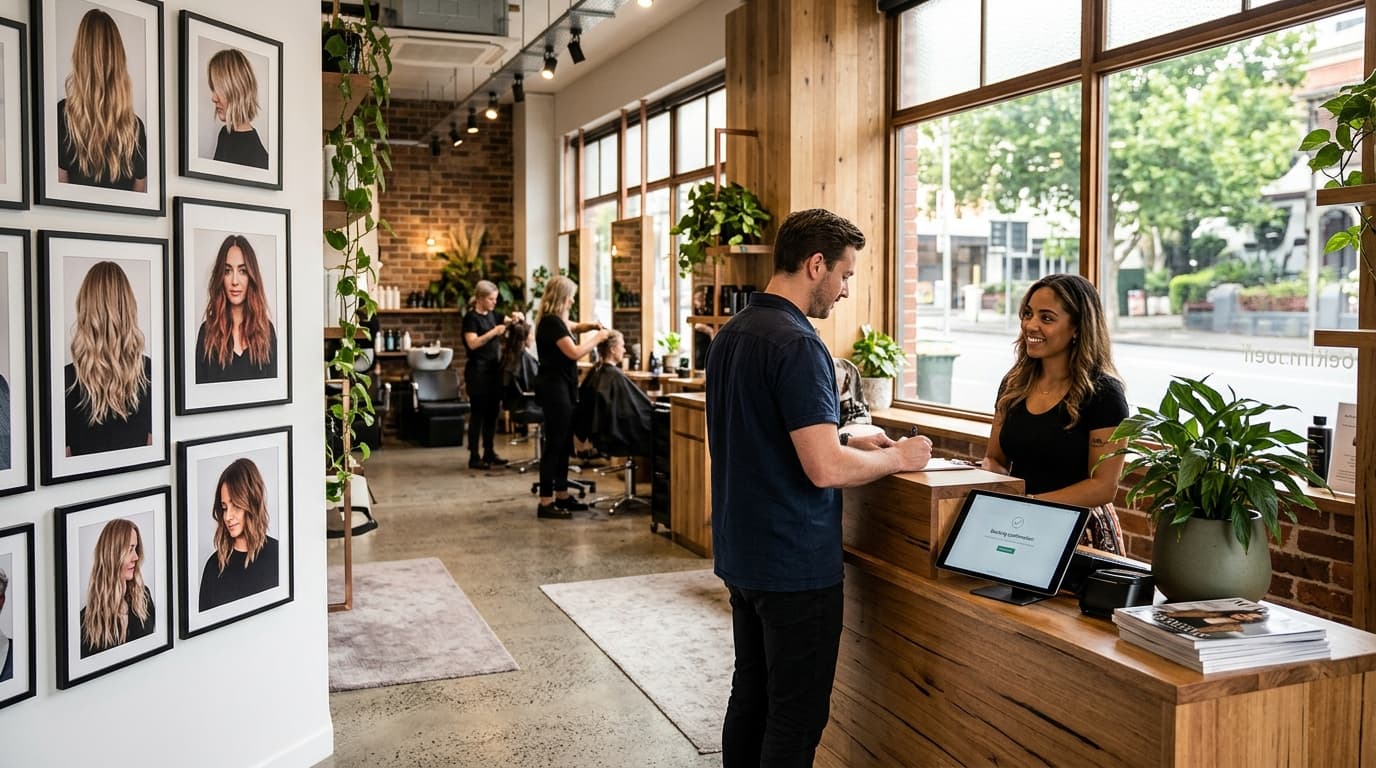
Your booking page is often the first real interaction a client has with your salon. Not your Instagram. Not a Google review. The moment they decide to book, they land on a page that either reinforces why they chose you, or quietly undermines it.
If that page looks like a white-label widget with someone else's logo in the footer, you've already lost ground. The brand you've spent years building, the aesthetic, the trust, the reputation, gets replaced by a generic form that could belong to any salon in the country.
This isn't a small thing. It's the difference between a client feeling confident and a client second-guessing whether they've clicked the right link.
First Impressions Happen Before the Appointment
Clients make judgements fast. Research consistently shows that people form trust assessments within seconds of landing on a page. For a salon, that trust is everything. A client booking a colour correction or a precision cut is putting real faith in you before they've even sat in the chair.
A booking page that looks polished, on-brand, and intentional signals that you run a professional operation. A booking page that looks like it was bolted on as an afterthought signals the opposite, even if your actual work is exceptional.
The gap between your Instagram presence and a generic booking widget is jarring. Clients notice it, even if they can't articulate why.
What a Branded Storefront Actually Does
OpenChair gives every venue a branded storefront with a custom domain. That means your booking page lives at something like book.yoursalonname.com.au, not a subdomain belonging to your software provider.
Custom colours and typography mean the page reflects your visual identity, not a default template. Your palette, your feel, your brand.
Beyond the visuals, the storefront includes a Before & After portfolio gallery. This is significant. A client browsing your booking page can see real examples of your work before they commit. That's not just decoration; it's a conversion tool. A client who sees a portfolio of colour work they love is far more likely to book, and far more likely to book the right service.
Team profiles let clients choose who they want, based on real information: specialisations, experience, and photos. This reduces mismatched expectations and builds a personal connection before the appointment starts. Clients who choose their stylist deliberately tend to rebook at higher rates.
The Problem With Generic Booking Widgets
Most booking software treats the client-facing page as secondary. The focus is on the back-end calendar, the reporting, the staff management. The booking page is an afterthought, a functional form that gets the job done without doing anything more.
That approach costs salons in ways that are hard to measure directly. A client who feels uncertain at the booking stage may abandon the form. A new client who can't find portfolio examples may book somewhere they've seen more evidence of quality. A returning client who doesn't recognise the page may wonder if they're in the right place.
These aren't dramatic failures. They're quiet ones. The booking that didn't happen, the client who chose a competitor, the trust that wasn't built.
Returning Clients Deserve a Better Experience Too
Acquiring a new client is expensive. Keeping one is where the economics of a salon actually work. So the returning client experience on your booking page matters just as much as the first impression.
OpenChair's My Bookings feature lets returning clients manage their appointments without creating an account or downloading an app. They receive a magic link, click it, and they're in. They can view upcoming appointments, reschedule, or cancel, all from their phone, in seconds.
This matters because friction kills rebooking. If a client needs to remember a password, download an app, or call during business hours to make a simple change, some of them won't bother. They'll just not show up, or not rebook at all.
Removing that friction is a direct lever on your rebooking rate. The easier you make it to stay connected to your salon, the more clients do.
Turning Cancellations Into Filled Chairs
Every salon has cancellations. The question is what happens next. In most systems, a cancelled slot sits empty until someone happens to book it, or until you manually reach out to a waitlist.
OpenChair's Earlier Availability opt-in changes that dynamic. When a client books, they can opt in to be notified if an earlier slot opens up. When a cancellation occurs, the system automatically offers that slot to clients who've expressed interest.
The result is that cancellations become opportunities rather than losses. A chair that would have sat empty gets filled. The client gets a more convenient time. Everyone wins.
For a busy salon running at high capacity, this feature alone can recover meaningful revenue across a month. A single filled slot per day across a five-day week adds up quickly.
One Link, Zero Friction: Quick Book Links
Your booking page doesn't just live at a URL. It lives in your Instagram bio, your Google profile, your SMS campaigns, your QR codes on business cards and mirrors and packaging.
Every time a client sees a different link, or lands on a generic page that makes them work to find the right service, you lose conversions.
Quick Book Links solve this. You create pre-filled booking URLs that go directly to a specific service, a specific team member, or a specific time slot. A QR code on a colour service menu goes straight to colour bookings. An SMS campaign for a specific stylist links directly to their availability. A social post about a new treatment links to that treatment's booking page.
The client clicks, they're already halfway through the booking. No searching, no scrolling, no second-guessing.
This is especially powerful for campaigns. If you're running a promotion via SMS or email, the difference between a generic booking link and a pre-filled Quick Book Link can be the difference between a campaign that converts and one that doesn't.
Brand Ownership Is a Business Decision
There's a broader point here. When your booking page looks like your software provider's product, you're building equity in their brand, not yours. Clients associate the booking experience with the widget, not with you.
When your booking page looks like your salon, every interaction reinforces your brand. The client remembers you. They refer friends to you. They feel a sense of loyalty to your business, not to a booking platform.
OpenChair's Style Match feature takes this further, using AI to recommend storefront design choices that align with your salon's aesthetic. It's not about picking colours from a dropdown; it's about making sure your digital presence reflects the same care and intention you put into your physical space.
The Booking Page Is Part of Your Service
The best salons understand that the client experience starts long before the appointment. It starts the moment a potential client searches for you, reads your reviews, looks at your work, and decides to book.
A booking page that looks and feels like your brand extends that experience into the digital space. It builds confidence. It reduces drop-off. It turns browsers into booked clients and booked clients into regulars.
Every element, the custom domain, the portfolio, the team profiles, the magic-link access, the Earlier Availability opt-in, the Quick Book Links, works together to make that moment of booking feel as considered as the appointment itself.
Smarter venue management starts with owning the full client journey, from the first click to the final invoice.