How a Christchurch Salon Owner Went From Spreadsheets to Sanity in One Weekend
One Merivale salon owner ditched Google Calendar and spreadsheets after a double-booking cost her a loyal client. Here's what changed in 90 days.
On this page
This is the kind of story we expect to hear often. A salon owner who's been running a tight ship for years, managing appointments in Google Calendar and money in a spreadsheet. It works — until it doesn't.
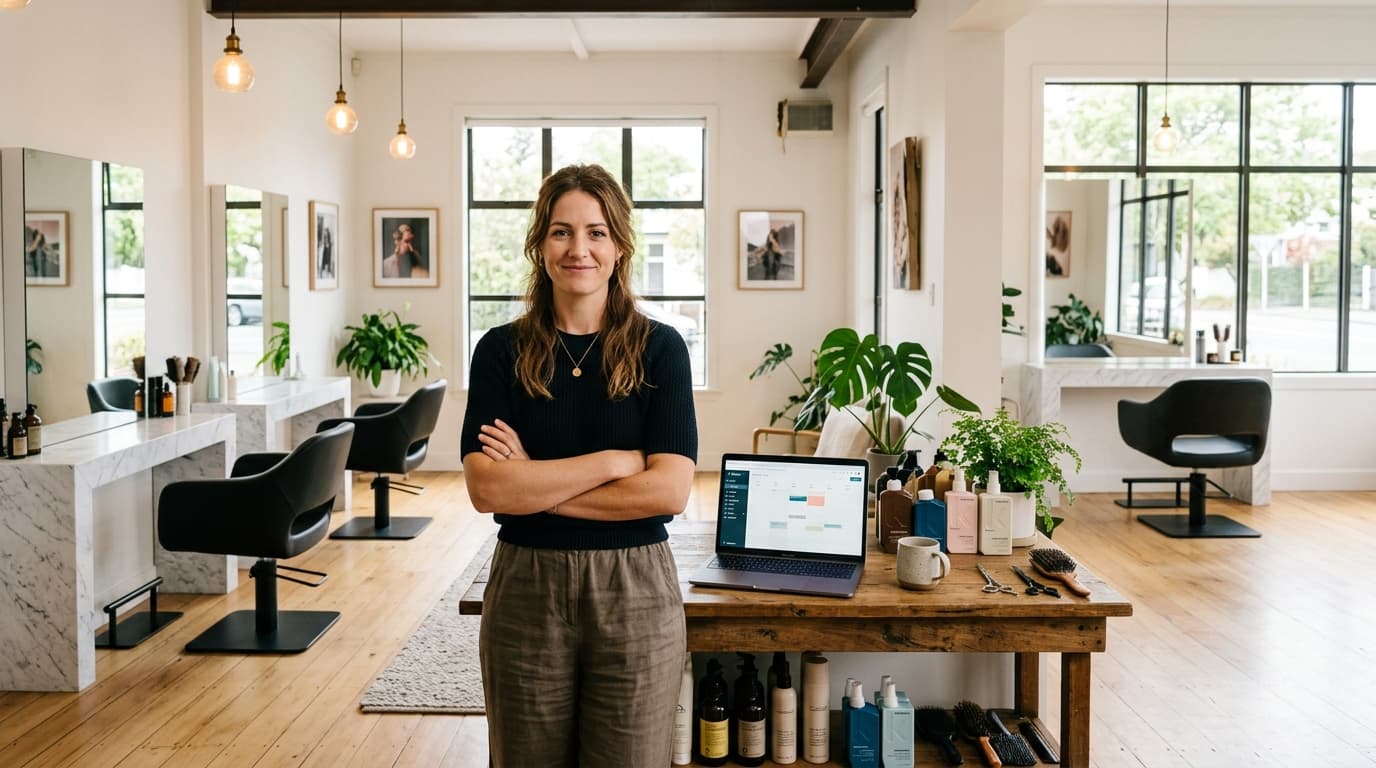
Sarah runs a three-chair salon in Merivale. She knows every client by name, remembers who's growing out a fringe, and has never missed a colour appointment. What she couldn't do was stop the spreadsheet from lying to her.
For most of her six years in business, Google Calendar handled appointments and a spreadsheet handled the money. "It worked until it didn't," she says. And on a busy Saturday morning in October, it stopped working in the worst possible way.
The Double-Booking That Changes Everything#
Two clients arrived at 9 a.m. for the same chair. One was a long-standing client who had been coming in every eight weeks for four years. The other was a new referral. Sarah's part-time staff member had added the new booking to the calendar without checking whether the slot was already taken. Google Calendar has no concept of services, no concept of duration, and no concept of which staff member is already committed.
The long-standing client left. She hasn't rebooked.
That afternoon, Sarah sat down and looked at what her system actually was. A calendar that showed time blocks but not services. A spreadsheet that tracked revenue but couldn't tell her what was available to book. Two staff members who each managed their own calendar entries. No reminders going out automatically. No deposits collected. No record of which clients hadn't been in for three months.
"I realised I wasn't running a system," she says. "I was just keeping track."
This is the moment most salon owners recognise. The tools that got them from zero to busy stop scaling. They're not failing — they're outgrowing.
The Migration: One Friday Evening#
Sarah signed up for OpenChair on a Friday afternoon. The setup isn't a weeks-long migration project. It's an evening's work.
She built out her service menu — 18 services with accurate durations, pricing, and which staff member could perform each one. The service setup covers add-ons for treatments she regularly upsells at the chair. Once services are configured, availability follows automatically: staff rosters set the bookable hours, service durations prevent the kind of overlap that caused the original problem.
By 9 p.m. Friday, her booking page was live. She sent a quick message to her client list with the new booking link.
By Monday morning, clients had booked online. Sarah hadn't touched the phone once over the weekend.
"I kept checking the app expecting to have to do something," she says. "There was nothing to do. The bookings were just there."
That's the pattern. A salon that was doing everything manually doesn't need to gradually transition — it can flip overnight, because the hard part isn't the technology. It's deciding to do it.
What Automated Reminders Actually Fix#
The no-show problem is one most salon owners know they have but haven't measured. The estimate is usually "maybe three or four a week." In reality, there's no data — the spreadsheet doesn't track no-shows. You absorb the lost revenue and move on.
Once automated reminders start going out, the pattern changes quickly. One 48 hours before the appointment, one on the morning of. Clients can confirm or request a change directly from the message. Nobody manages it.
The no-show rate typically drops within the first few weeks — often dramatically. At an average service value of around $90 to $100, three to four no-shows a week is somewhere between $14,000 and $20,000 a year in lost revenue. Most salon owners don't think about it in those terms until it's solved. The reminders make the invisible cost visible by making it go away.
Deposits: Turning No-Shows Into Revenue Protection#
Beyond reminders, OpenChair's Deposit Manager lets you require a deposit at the point of booking. For colour services, a $40 deposit collected upfront changes the economics of a cancellation. Non-refundable inside 24 hours, it converts last-minute no-shows from pure loss into partial recovery.
The deposit mechanic also changes booking behaviour before anything is forfeited. Clients who pay something upfront are more committed. Last-minute cancellations drop — not just the no-shows that technically trigger a forfeit, but the casual ones where someone just doesn't bother rescheduling.
Deposits are configurable per service, with separate rules for new and returning clients if you want to use them differently. The policy is yours to set. For context on how forfeited deposits interact with GST obligations for AU/NZ operators, it's worth reviewing the compliance basics for AU/NZ salon owners before you configure yours.
What the Pattern Looks Like#
Here's where salons like Sarah's typically end up once the system is running:
The majority of bookings come in online, without staff involvement. The phone still rings — mostly existing clients who prefer it — but new clients almost always book through the storefront. That shift alone reclaims hours per week that were spent scheduling manually.
No-shows move from a weekly occurrence to an occasional one. The admin time that previously went into chasing confirmations, re-booking last-minute gaps and updating the spreadsheet goes away.
The Intelligence Dashboard gives a weekly view of revenue, booking patterns, and which services are performing. For an owner who previously had no visibility beyond what the spreadsheet showed, it's the first time the business is actually legible. "It's the first time I've actually understood my own business," is what we expect to hear.
The Thing Nobody Tells You About Switching#
Sarah expected the migration to be hard. She had heard stories about software transitions taking weeks, requiring a consultant, or breaking something in the process.
It took one evening. Not because it's magic, but because the setup is designed for exactly this scenario: a working salon with no time to waste on a complicated onboarding process.
The harder realisation isn't the technology. It's how much the old system was costing her without ever showing up as a line item. No-shows don't appear on a spreadsheet as losses. Admin hours don't appear as opportunity cost. A double-booking just looks like a bad day.
When you build a booking page that actually represents your brand and connects to real availability, clients book with confidence. When reminders go out automatically and deposits are collected at the point of booking, the business runs more like a business.
Sarah still knows every client by name. She still remembers who's growing out a fringe. The difference is that her system now knows it too — and it's doing the work she used to do manually at 9 p.m. on a Friday night.