What Australia's Card Fee Ban Means for Your Salon in 2026
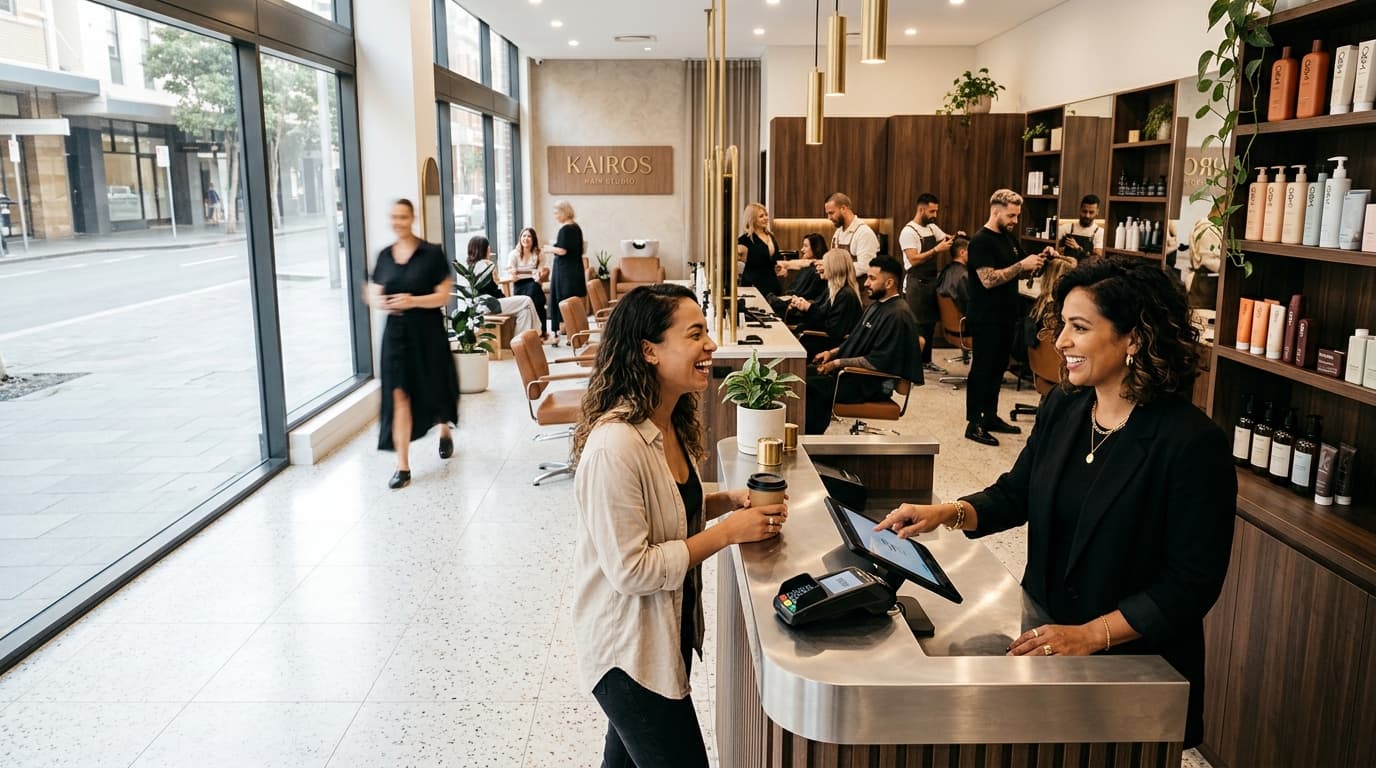
Something significant is changing for Australian small businesses — and if you run a salon, barbershop, tattoo studio, or beauty clinic, you need to know about it before October.
The Reserve Bank of Australia has confirmed that from 1 October 2026, adding a surcharge to card payments will be prohibited. Not discouraged. Not regulated. Prohibited.
If you have ever added a percentage fee at checkout for Visa, Mastercard, or eftpos, that option disappears in six months. Here is exactly what is changing, who is affected, and what you need to do right now.
What is actually changing
For years, Australian businesses have been allowed to pass card processing costs on to the customer as a surcharge — that small percentage fee that appears at checkout and makes the total slightly more than the advertised price.
From 1 October 2026, that practice ends for the most common card types. The prohibition covers:
- Debit cards on Visa, Mastercard, and eftpos (including standard, gold, and platinum)
- Credit cards on Visa, Mastercard, and eftpos (including standard, gold, and platinum)
- Prepaid cards, including gift cards and reloadable travel cards
- Online transactions, not just in-person payments
The rule applies across every channel. Online bookings, in-person payments, tap to pay — all of them.
The ACCC will enforce compliance. The reform is not a guideline.
Why the RBA is doing this
The stated goal is "what you see is what you pay." The RBA wants the price shown to a customer at the start of a transaction to be the price they pay at the end. No surprises.
To make this workable for businesses, the RBA is simultaneously cutting the interchange fees that banks charge merchants to process payments. Debit card processing caps drop from 0.20% to 0.16%. Credit card processing caps drop from 0.80% to 0.30%.
In plain terms: the underlying cost of accepting cards is going down at the same time you are being asked to absorb it. The intent is that these two changes offset each other and most businesses can absorb the shift without raising their prices.
Who does this actually affect
Not every salon or barbershop adds a surcharge. If you currently absorb your processing fees entirely — your clients pay exactly what your services are priced at, nothing more — this reform changes nothing for you operationally. You will simply continue what you are already doing.
The operators who need to act are those who have been adding a percentage surcharge to card transactions at checkout. If a client pays $120 for a colour service and sees $122.40 on their final receipt, your business is surcharging — and that practice becomes illegal for Visa, Mastercard, and eftpos from October.
This is common across salons and barbershops, particularly those using older point-of-sale systems that were set up years ago and have simply continued as-is.
What is still permitted
Two categories remain outside the initial ban, and both are worth understanding.
American Express and Diners Club are exempt. These are "three-party" card schemes where the card issuer and the network are the same entity. If a client pays with Amex, you may still apply a surcharge from 1 October.
Internationally issued cards are also exempt — but only until 1 April 2027. If a tourist visiting from Japan pays with their Japanese Visa card, that card falls outside Australia's domestic rules until April next year. After that date, international cards will be brought under the same prohibition.
What you need to do before October
1. Find out what your current payment setup does.
If you are unsure whether your booking software or point-of-sale system is adding a surcharge, check your payment settings now. Look for any "fee absorption" or "processing fee" setting. If it is set to pass fees to customers, you need to update it before October.
2. Check every touchpoint.
The ban covers online and in-person. Your booking page, your in-salon terminal, and any payment links you send manually all need to reflect the same policy. A missed channel is still a violation.
3. Update your service pricing if needed.
If you have been relying on surcharges to maintain your margin, now is the time to review your service prices. A modest price adjustment built into your menu is far better than being caught adding an illegal checkout fee.
4. Do not wait until September.
System changes take time, and the ACCC is not known for generous grace periods on reforms of this kind. Make the change now while you have six months, not in the last week of September.
How OpenChair handles this for you
We built OpenChair to give Australian venue owners control over their fee settings — and to make compliance straightforward when the rules change.
Right now, if you open your Payment Settings in OpenChair, you have three options:
- Absorb all fees — your clients pay the service price, full stop. Your revenue covers the processing cost.
- Pass international card fees only — domestic cards are absorbed, but an additional 1.8% applies when a client pays with an overseas-issued card. This reflects the genuine cost difference of processing those transactions.
- Pass all fees to customers — currently available, but changing.
That third option, passing all fees to customers, will not be available for Australian venues from 1 October 2026. We are removing it automatically on that date to keep every OpenChair venue compliant by default.
You do not need to remember to make this change. We are handling it.
If you are currently using the "pass all fees" setting, you will see a notice in your payment settings now explaining what is changing and recommending you switch to one of the two compliant options before October. "Pass international card fees only" is a reasonable choice for most venues — you absorb the domestic processing cost but continue to recover the genuine additional cost of international cards, which remain exempt until April 2027.
If you are already on "absorb all fees," nothing changes for you. You are already compliant and you will continue to be.
The bigger picture
This reform is not bad news for salons and barbershops. It removes a checkout experience that many clients found frustrating and that some operators found awkward to explain. Transparent pricing — the price on your menu is the price a client pays — is actually a cleaner experience for both sides.
The interchange fee reductions happening alongside the surcharge ban are designed to make this sustainable. Whether individual payment processors pass those reductions through immediately is a separate question, and one worth watching.
What the reform does clarify is that if you are running your business on OpenChair and keeping your payment settings current, you will not be caught out. The safeguard is already built in.